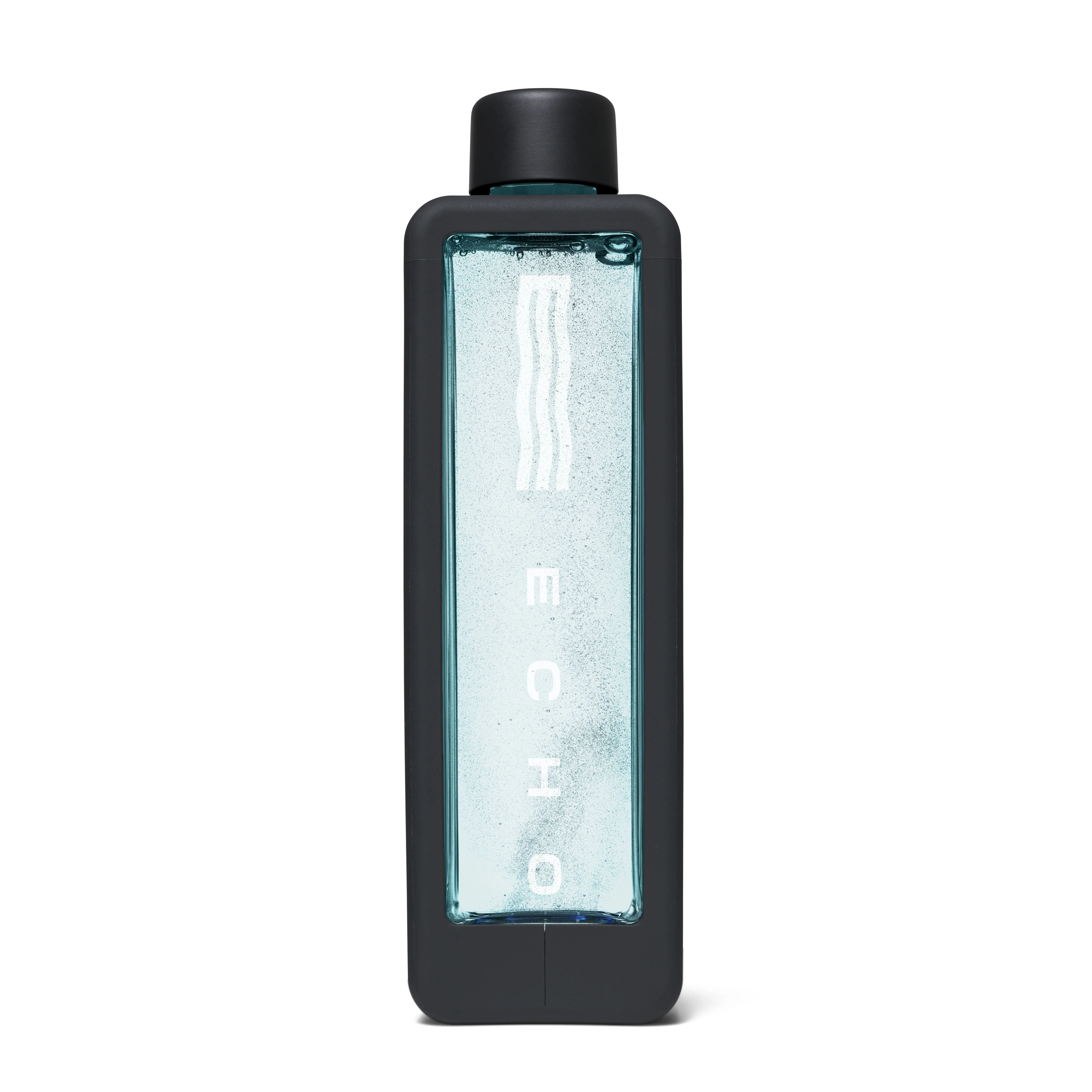
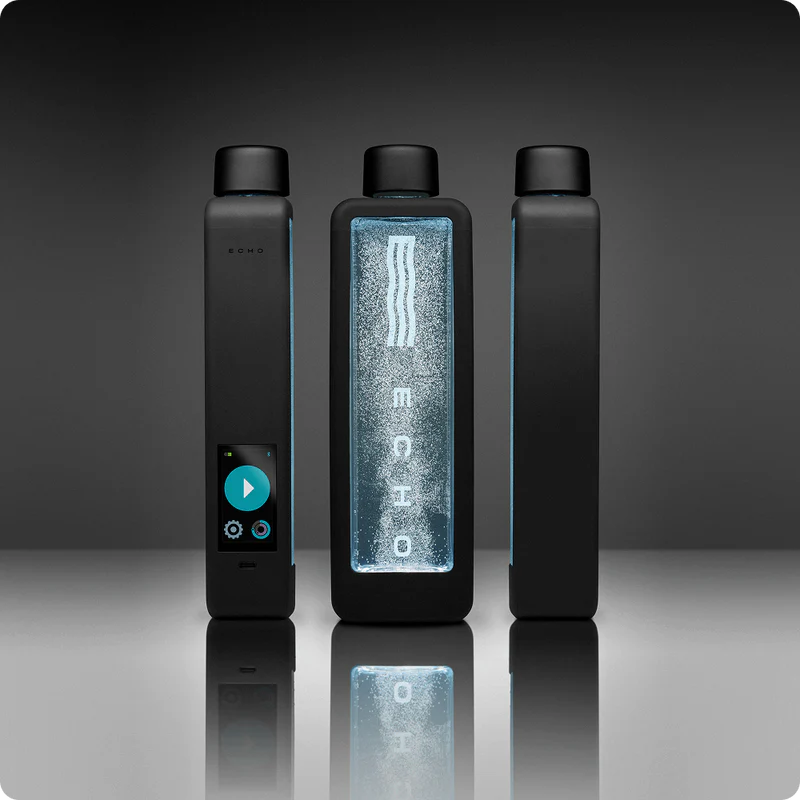
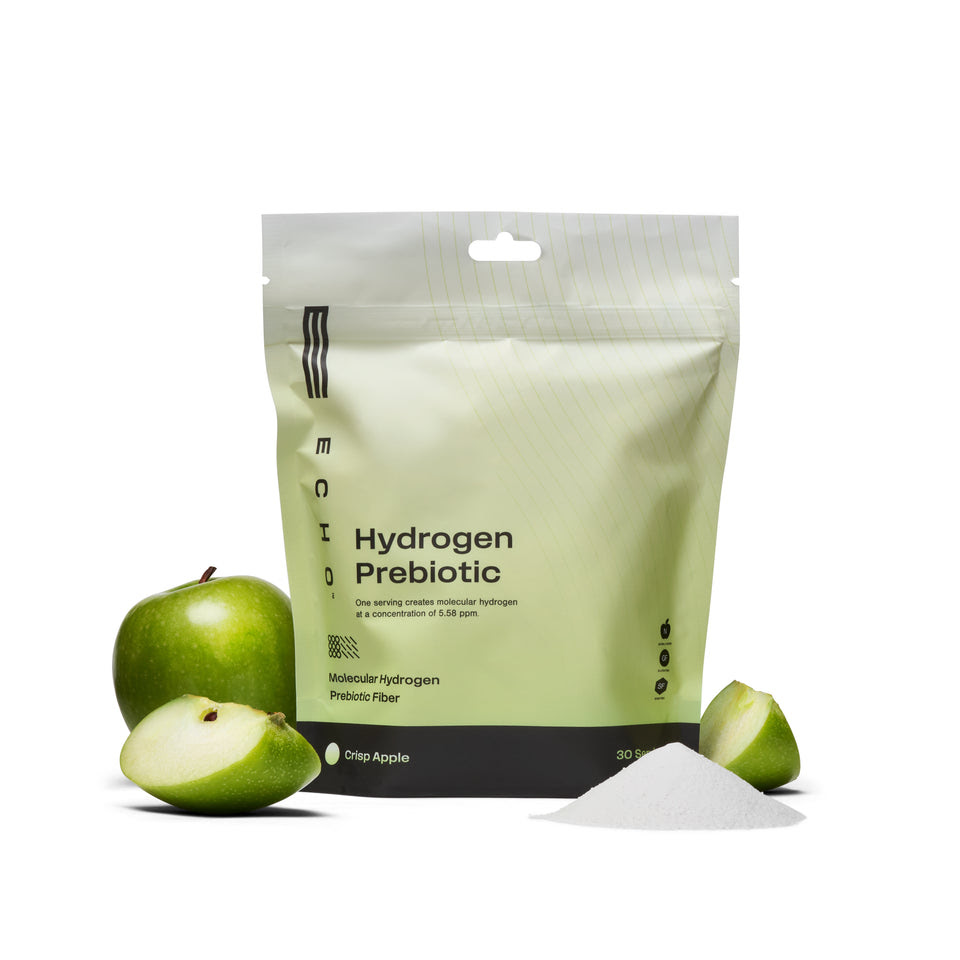
The hydrogen water bottle market is crowded, and most labels don't make it easy to compare products fairly. A big number on the box can mean very different things depending on whether it's measured in PPM (parts per million) or PPB (parts per billion) — 1,200 ppb sounds impressive until you realize it's only 1.2 ppm.
This page breaks down how Echo's portable and reaction-based products compare to traditional hydrogen water bottles and magnesium tablet systems, using published specifications and independent lab certification rather than marketing copy.
| Specification | Traditional Hydrogen Bottle | Echo Flask |
|---|---|---|
| Technology | Basic electrolysis, varies widely by brand | SPE (Solid Polymer Electrolysis) + PEM (Proton Exchange Membrane) |
| Reported Units | Often PPB (parts per billion) — can overstate concentration at a glance | PPM (parts per million) — 1 ppm = 1,000 ppb |
| Dissolved Hydrogen Output | Per Echo's own published comparison: competitor bottles ≤8 oz, <5 ppm | 6.07 mg/L after a 10-min cycle, up to 8.25 mg/L after a 20-min cycle (H2 Analytics Report H2AR-250116-1) |
| Independent Certification | Varies; not always disclosed | H2 Analytics (IHSA-approved lab), gas chromatography |
| Byproduct Control | Varies; basic electrolysis can release chlorine/ozone | Dual-chambered Nafion membrane technology |
| Warranty | Varies by brand | 5-year |
| Capacity | Often ≤8 oz | 12 oz |
Traditional bottle output ranges referenced from published industry comparisons. Echo Flask specs from Echo Water's published materials and H2 Analytics certification. Actual output varies by unit, cycle length, and testing conditions.
Powdered and tablet hydrogen supplements have existed for years, using a magnesium reaction to release hydrogen into water. A common tradeoff with older formulations has been a harsh, metallic taste that made regular use less appealing, along with less consistent dosing between packets.
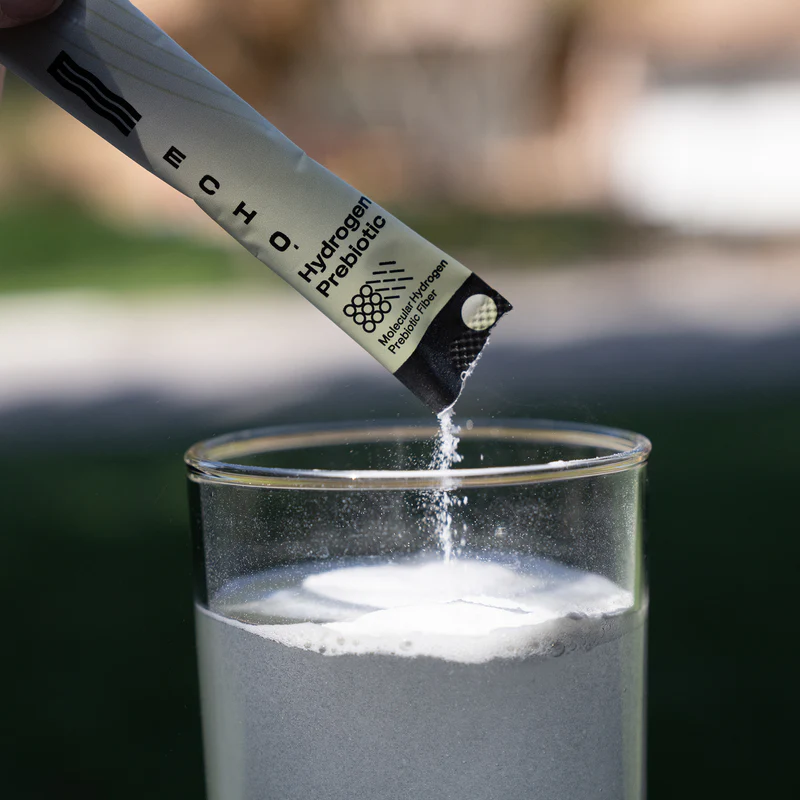
Echo's Hydrogen Prebiotic uses nano-magnesium engineered to avoid the harsh taste of older tablet formulations, delivering a stated 16 ppm (5.65 mg) hydrogen dose per packet in its current formula, alongside a prebiotic fiber blend for gut support. No equipment, no charging — just mix and drink within the stated window.
Basic electrolysis splits water into hydrogen and oxygen, but without a membrane to control the process, it can also release unwanted byproducts like chlorine or ozone back into the water you're drinking. SPE (Solid Polymer Electrolysis) paired with PEM (Proton Exchange Membrane) technology adds a controlled barrier to that process — separating hydrogen more cleanly and keeping those byproducts out.
This is also why independent certification matters more than the number printed on the box. The Echo Flask's output isn't just a marketing figure — it's backed by H2 Analytics (Report H2AR-250116-1), which used gas chromatography to confirm 6.07 mg/L of dissolved hydrogen after a 10-minute cycle and up to 8.25 mg/L after 20 minutes. Not every bottle on the market publishes a lab report like that.
Beyond the electrolysis mechanism, the Echo Flask's construction is part of what separates it from a basic hydrogen bottle:
Most hydrogen water bottles report output in PPB (parts per billion) rather than PPM (parts per million), which can make the numbers look larger than they are — 1,200 ppb is only 1.2 ppm. The Echo Flask is independently certified by H2 Analytics using gas chromatography at 6.07 mg/L after a 10-minute cycle and up to 8.25 mg/L after 20 minutes, and uses SPE (Solid Polymer Electrolysis) paired with a PEM (Proton Exchange Membrane) to keep byproducts like chlorine out of the water.
Both are reaction-based, using magnesium to release molecular hydrogen when mixed with water rather than electrolysis. Traditional magnesium tablets have historically had a harsh, metallic taste. Echo's Hydrogen Prebiotic uses nano-magnesium designed to avoid that taste while delivering a stated 16 ppm (5.65 mg) dose per packet in its current formula, along with a prebiotic fiber blend.
SPE stands for Solid Polymer Electrolysis and PEM stands for Proton Exchange Membrane. Together they describe a membrane-based electrolysis process that separates hydrogen and oxygen more cleanly than basic electrolysis, helping prevent byproducts like chlorine or ozone from ending up in the water.
Yes. The Echo Flask holds an active certification from H2 Analytics, a lab approved by the International Hydrogen Standards Association (IHSA) to test hydrogen concentration using gas chromatography, currently the only IHSA-authorized testing method.
The Echo Flask itself has no built-in filtration stage, since it's a portable electrolysis device rather than a plumbed home system. Echo recommends using filtered, distilled, or reverse osmosis water for best performance and longevity, and notes their own product testing was done exclusively with RO or distilled water. Tap water can be used, but Echo states it may accelerate mineral buildup inside the unit. This is different from a home water ionizer like Tyent's, which filters water inline automatically as a built-in step before electrolysis.
Echo's manual splits maintenance into two parts. The bottle vessel gets a weekly wash with mild soap and warm filtered water, rinsed thoroughly. The H2 generator (the electrode/membrane assembly) is cleaned separately, monthly, using a mix of 1/3 vinegar and 2/3 warm distilled water, run through the built-in "Clean Flask" cycle in the settings menu, which also helps balance the polarity of the generator plates. The Flask should be hand washed only, never placed in a dishwasher or submerged, and water should be kept away from the touchscreen and charging port at all times. Frequent users can clean the outside portion of the flask more often, even daily, if needed.
Come try the Echo Flask and Hydrogen Prebiotic in-studio, or take one home.